Listen or Fix? The Mistake Adults Often Make When Students Open Up
16th November 2026
A student lingers after class. They fiddle with their bag strap and say, “Can I tell you something?”
In that second, most teachers feel two things at once: care and pressure. Care, because a young person has chosen you. Pressure, because you now feel you have to do something about whatever comes next.
So you reach for advice, reassurance, or a solution. It feels like the right move. Very often, it is the exact thing that makes the student stop talking.
This blog looks at why that happens and what to do instead. It also covers how counselling skills for teachers can help you respond in a way that keeps the door open, without pretending to be something you are not.
Why Adults Rush to Fix Problems When Students Open Up
The urge to fix is not a flaw. It comes from care. Teachers are trained to solve problems all day: a misunderstood concept, a broken group task, a missing worksheet.
But a student sharing something personal is usually not presenting a problem to be solved. They are checking whether it is safe to be honest.
When adults jump in early, a few things tend to happen:
- The student feels their experience has been shrunk into a quick answer
- The conversation ends at the first piece of advice
- The student learns that sharing leads to instructions, not understanding
- Next time, they may share less, or not at all
Fixing is not wrong in itself. The mistake is doing it before the student feels heard.
Common Ways Well-Meaning Adults Shut a Conversation Down
Most of these responses come from kindness. They still tend to close the conversation.
|
What adults often say |
What the student may hear |
|
“Don’t worry, it will be fine.” |
“My feelings are not a big deal.” |
|
“At your age, I went through the same.” |
“This is about you, not me.” |
|
“Just ignore them.” |
“You think it’s simple, so I must be overreacting.” |
|
“You should talk to your parents.” |
“I am being passed along.” |
|
“Why didn’t you tell me sooner?” |
“I did something wrong by waiting.” |
Notice that none of these are unkind. That is exactly why they are so easy to miss.
What Listening Actually Looks Like in a School Setting
Listening is not silence. It is active, and it can be learned.
The idea of listening to understand rather than to respond goes back to the person-centred approach developed by psychologist Carl Rogers. His work highlighted three qualities that help people feel safe enough to open up: empathy, genuine acceptance without judgement, and honesty in how you respond.
In everyday school terms, that looks like this:
- Give Your Full Attention: Put the marking down. Face the student. Even two focused minutes matter more than twenty distracted ones.
- Let Them Finish: Resist completing sentences or correcting details.
- Reflect What You Hear: “It sounds like you felt left out at lunch.” This shows you are following, not judging.
- Name The Feeling Gently: “That sounds really frustrating.” Do not guess too confidently. Let them correct you.
- Be Comfortable With Pauses: Silence often gives the student room to say the harder part.
Practical Student Counselling Techniques Teachers Can Use
You do not need a counselling qualification to use basic, well-established listening techniques. One widely taught framework comes from motivational interviewing, developed by William Miller and Stephen Rollnick. It is often summarised as OARS.
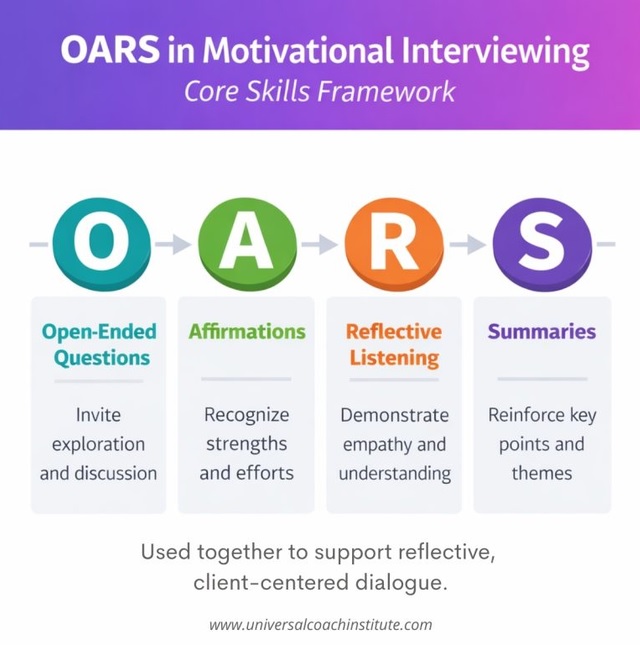
O: Open Questions
Questions that invite more than yes or no. “What was that like for you?” works better than “Were you upset?”
A: Affirmations
Recognising effort or courage. “It took a lot to bring this up. Thank you for trusting me.”
R: Reflective Listening
Repeating back the meaning in your own words. “So you’re worried that if you say something, it’ll get worse.”
S: Summaries
Pulling the conversation together. “Let me check I’ve understood. You’ve been feeling left out for a few weeks, and it’s starting to affect how you feel about coming in. Is that right?”
These student counselling techniques are simple, but they work because they put the student’s own words at the centre of the conversation.
Should You Ever Offer Advice? When to Move From Listening to Helping
Yes, but later, and with permission.
Once a student feels heard, they are often more open to ideas. A useful way to shift is to ask rather than tell:
- “Would it help to think through some options together?”
- “What have you already tried?”
- “What do you think might help?”
This keeps the student as the decision-maker in their own situation. It also builds confidence, because the solution feels like theirs rather than something handed down.
Where a Teacher’s Role Ends: Boundaries, Confidentiality, and Referral
This is the part that matters most for protecting both the student and you.
Teachers are not therapists. Listening well does not mean diagnosing, treating, or carrying a student’s difficulties alone. Being clear about this is part of being professional, not a limit on your care.
- Do Not Promise Confidentiality You Cannot Keep
If a student says something that suggests they or someone else may be at risk of harm, schools have a duty to act. Before a student shares, or as soon as it becomes clear, you can say: “I want to listen, and I will respect your privacy as much as I can. If I’m worried about your safety, I may need to talk to someone who can help.”
This is honest, and it protects the student’s trust in the long run.
- Know Your School’s Safeguarding Process
Every school should have a designated person for safeguarding and a clear procedure for passing on concerns. Know who that is and how to reach them before you need them. The specific roles and legal requirements vary by country, so follow your school’s policy and local regulations.
- Refer When it is Beyond Your Role
Signs a student may need more specialist support include:
- Distress that is persistent or getting worse
- Changes in behaviour, sleep, appetite, or attendance
- Talk of self-harm or not wanting to be alive
- Disclosures about abuse or neglect
- Difficulties that are clearly affecting their daily functioning
In these cases, do not wait. Follow your school’s procedure immediately and involve the designated safeguarding lead or school counsellor.
- Look After Yourself Too
Holding other people’s difficulties is draining. Debrief through the proper channels, keep your own boundaries, and do not carry it all alone.
How to Build Counselling Skills Beyond Good Instinct
Plenty of teachers are naturally good listeners. But instinct has limits, especially in high-stakes moments where the wrong response can matter.
Structured learning helps because it gives teachers:
- A shared language for talking about student wellbeing
- Practice in techniques like reflective listening before they are needed
- Clarity on boundaries, referral, and ethical practice
- Confidence to respond calmly instead of freezing or over-reacting
For teachers who want that depth, school counselling courses offer a more formal route into the theory and practice of supporting young people. They can also be a stepping stone for those who want to move toward a dedicated pastoral or counselling role. When choosing one, check what it covers, who accredits it, and whether it includes practical application, not just theory.
Bottom Line
When a student opens up, the most helpful thing is rarely a solution. It is feeling heard.
The habit of listening first, reflecting what you hear, and holding clear boundaries around your role does not make you less helpful. It makes you more trustworthy, and trust is what keeps a student willing to come back.
Strengthening your counselling skills for teachers is one of the most practical investments you can make in the students you work with. For those who want to go further, school counselling courses provide structured training that turns good instinct into reliable practice.
The next time a student asks, “Can I tell you something?”, you will not need all the answers. You will just need to listen.
Frequently Asked Questions (FAQs)
1. What should a teacher say when a student opens up about a personal problem?
Start by acknowledging the student's trust and giving them your full attention. Simple responses such as “Thank you for telling me” or “Would you like to share more?” can encourage conversation without making the student feel judged or pressured to accept advice.
2. Why is active listening important in student counselling?
Active listening helps students feel understood and respected. It allows teachers to recognise underlying concerns, avoid premature assumptions, and respond more thoughtfully. It can also help students feel comfortable seeking support again.
3. What are the most useful student counselling techniques teachers can practise?
Practical student counselling techniques include open-ended questions, affirmations, reflective listening, and summarising. These approaches encourage students to express their thoughts while helping teachers check that they have understood the situation correctly.
4. How can Counselling Skills for Teachers help educators support students emotionally?
Counselling Skills for Teachers can help educators develop empathy, active listening, appropriate questioning, and an understanding of professional boundaries. These skills support sensitive conversations while helping teachers recognise when a student needs specialist assistance.
5. When should a teacher refer a student to a school counsellor instead of handling the situation alone?
Teachers should follow safeguarding and referral procedures when a student discloses abuse, expresses thoughts of self-harm, shows persistent emotional distress, or experiences difficulties affecting daily functioning. Immediate safety concerns require prompt action under the school's safeguarding policy.
6. Are school counselling courses useful for teachers who do not want to become counsellors?
Yes. School counselling courses can help classroom teachers strengthen communication, understand student wellbeing, recognise warning signs, and develop appropriate referral skills. Teachers can apply this knowledge in everyday interactions without taking on the role of a qualified counsellor.
Written By : Bindita