Flip Your Lid Model Explained: A Classroom Guide for Teaching Emotions
14th April 2026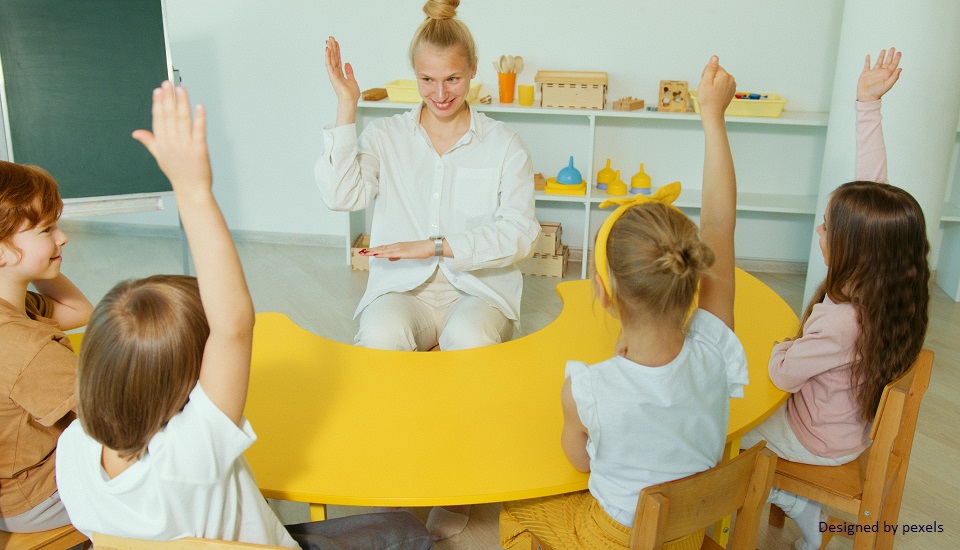
What if one simple hand gesture could help a child understand why they just threw a pencil across the room?
That's exactly what the Flip Your Lid model does, and teachers around the world are quietly transforming their classrooms with it.
Developed by psychiatrist and author Dr. Daniel Siegel, the Flip Your Lid model uses the human hand as a metaphor for the brain. It explains, in seconds, why children (and adults) lose control of their emotions, and more importantly, what to do about it.
For teachers who work daily with children navigating frustration, anxiety, grief, and anger, this model is not just useful.
It's essential.
What Is the Flip Your Lid Model and Why Does It Matter in Schools?
The hand model of the brain breaks down like this:
- Your wrist and palm represent the brain stem — the part that controls survival instincts like fight, flight, or freeze.
- Your thumb folded across your palm represents the limbic system — the emotional centre of the brain, where feelings like fear, anger, and joy live.
- Your four fingers folded over the thumb represent the prefrontal cortex — the rational, thinking brain responsible for decision-making, empathy, and self-regulation.
When everything is working well, the fingers stay folded, the cortex is "online," keeping emotions in check.
But when a child experiences stress, fear, or overwhelming emotion, they "flip their lid", the fingers fly up, the prefrontal cortex goes offline, and they're left operating purely from the emotional and survival brain.
This is why a child mid-meltdown cannot reason with you. Their thinking brain has literally disconnected.
Understanding this at a neurological level and being able to explain it simply is one of the most powerful tools available in counselling for students in schools. It removes shame from the equation. Instead of "Why are you acting like this?" the conversation becomes "Your lid flipped.
Let's figure out how to close it."
Step-by-Step: How to Teach the Flip Your Lid Model in Your Classroom
Step 1: Introduce the Hand as a Brain (Ages 5–12)
Start with curiosity, not instruction. Hold up your hand and ask students: "Did you know your hand can show you exactly what's happening inside your brain?"
Demonstrate the model slowly:
- Open palm facing you = the brain from the front
- Tuck your thumb in = this is your feeling brain (limbic system)
- Wrap four fingers over the thumb = this is your thinking brain (prefrontal cortex)
Keep the language age-appropriate. With younger children, call it the "feeling brain" and "thinking brain." With older students, you can introduce terms like the limbic system and the prefrontal cortex, they love the scientific vocabulary.
Key message to anchor: "When our thinking brain is connected, we can solve problems, make good choices, and understand how others feel."
Step 2: Show What "Flipping the Lid" Looks Like
Now flip your fingers open dramatically and say: "This is what happens when we get really angry, scared, or upset. Our thinking brain goes offline."
Ask students to share, anonymously if needed, situations where they've felt their lid flip. Common examples include:
- A sibling taking something without asking
- Failing a test, they studied hard for
- Being left out at lunch
This step is crucial. It normalises the experience. Every child in the room has flipped their lid. Every adult has too. When students realise this is biology — not a character flaw — the shame lifts.
For teachers, this moment is the beginning of genuine emotional literacy in the classroom.
Step 3: Teach the Triggers — What Flips the Lid?
Help students identify their personal triggers before they're in the middle of a crisis. Create a class activity called "My Lid Flippers", a simple worksheet or discussion where students list what tends to flip their lid.
Categorise triggers into three areas:
Physical triggers: Hunger, tiredness, illness, sensory overload.
Emotional triggers: Embarrassment, rejection, fear of failure, feeling unheard
Environmental triggers: Loud classrooms, unpredictability, conflict at home
When children can name their triggers in a calm moment, they're far better equipped to recognise the warning signs when those triggers appear in real time.
Step 4: Introduce the "Lid-Closing" Strategies
Once students understand why the lid flips, they need practical tools to close it. These are co-regulation and self-regulation strategies — and they must be practiced regularly, not just introduced once.
Breathing techniques: Box breathing (inhale 4 counts, hold 4, exhale 4, hold 4) is highly effective and easy to teach. Label it as "sending oxygen to the thinking brain."
Body-based movement: Jumping jacks, stretching, or even a short walk can help discharge the stress response and bring the prefrontal cortex back online.
Sensory grounding: The 5-4-3-2-1 technique (name 5 things you can see, 4 you can touch, etc.) anchors a child in the present moment and interrupts the emotional spiral.
Safe space access: A designated calm corner in the classroom — not as punishment, but as a recognised tool- gives children a physical place to regulate before returning to learning.
Connection before correction: Sometimes a child just needs a teacher to acknowledge their feeling out loud. "I can see you're really frustrated right now. That makes sense." This alone can begin to close the lid.
Step 5: Build a Classroom Culture Around Emotional Literacy
The Flip Your Lid model only reaches its full potential when it becomes part of daily classroom language, not a one-time lesson.
Practical ways to embed it:
- Use the hand model during morning check-ins: "On a scale of fingers down to lid flipped, where are you today?"
- Refer to it naturally during conflicts: "It sounds like your lid flipped. What do you need right now?"
- Celebrate lid-closing moments publicly: "I noticed you took three deep breaths instead of reacting. That was your thinking brain in action."
- Involve parents by sending home a simple explainer so the language is consistent between school and home
When teachers speak this language consistently, students internalise it. Over time, they begin to self-identify and self-regulate without prompting, which is the ultimate goal of social-emotional learning.
Why Teachers Need More Than Good Intentions
Many teachers instinctively want to support their students emotionally, but intuition alone isn't enough. Understanding the neuroscience behind emotional behaviour, knowing how to respond during a dysregulation episode without escalating it, and creating a psychologically safe classroom require structured knowledge.
This is where having a foundation in child psychology and counselling approaches becomes invaluable. A growing number of educators are pursuing a globally recognised counselling certification to deepen their understanding of student behaviour, trauma, attachment, and emotional development, not to become therapists, but to teach with greater awareness, compassion, and effectiveness.
The Flip Your Lid model is a gateway. But the deeper knowledge that contextualises it, about attachment theory, adverse childhood experiences, and co-regulation, makes all the difference in how confidently and consistently a teacher can apply it.
Common Mistakes Teachers Make When Teaching Emotional Regulation
Even with the best tools, some common pitfalls can undermine progress:
Introducing it only during conflict: The model should be taught when everyone is calm. Introducing it mid-meltdown is too late.
Treating it as a one-off lesson: Emotional literacy is built through repetition and consistent language, not a single classroom session.
Skipping the co-regulation step: Children cannot self-regulate before they've experienced co-regulation with a trusted adult. The teacher's calm is the first tool.
Using it as a label, not a language: Saying "You've flipped your lid" as a judgment defeats the purpose. It should always be offered with warmth and curiosity.
Underestimating their own lid: Teachers flip their lids, too. Modelling what it looks like to notice your own dysregulation and recover from it is one of the most powerful lessons you can give a child.
The Research Behind Teaching Kids About Emotions in Schools
The evidence base for social-emotional learning (SEL) in schools is robust. A landmark meta-analysis published in the Child Development journal found that students who received quality SEL instruction showed an 11-percentile-point gain in academic achievement compared to those who didn't.
Further research by the Collaborative for Academic, Social, and Emotional Learning (CASEL) consistently shows that when children can identify and manage their emotions, they demonstrate improved classroom behaviour, stronger peer relationships, and greater resilience under pressure.
The Flip Your Lid model sits comfortably within this evidence base, it's trauma-informed, developmentally appropriate, and neurologically grounded.
Final Thoughts
A child who cannot regulate their emotions cannot fully access their learning. That's not a discipline problem, it's a brain problem, and it deserves a brain-based solution.
The Flip Your Lid model gives teachers a shared language, a visual tool, and a compassionate framework for understanding behaviour that might otherwise look like defiance, laziness, or disrespect. Used consistently, it can shift an entire classroom culture, from reactive to responsive, from punitive to curious.
For teachers who want to go deeper, the growing availability of structured support around counselling for students in schools, through training programmes, workshops, and professional certifications, means this knowledge is more accessible than ever before. The children in your classroom are waiting for adults who understand not just what they're learning, but how they're feeling while they learn it.
That shift starts with something as simple as a hand.
Frequently Asked Questions (FAQs)
1. What is the Flip Your Lid model?
The Flip Your Lid model uses the hand to explain how the brain reacts during stress, helping students understand emotional regulation.
2. Why is the Flip Your Lid model important in schools?
It helps students understand why they lose control during emotional moments and teaches them how to regain calm and focus.
3. How can teachers use this model in the classroom?
Teachers can demonstrate the hand model, explain triggers, and teach strategies like breathing, movement, and grounding techniques.
4. What are “lid-closing” strategies?
These include breathing exercises, sensory grounding, movement, and safe spaces that help students regain emotional control.
5. Why is emotional learning important for students?
Students with strong emotional regulation skills show better behaviour, improved relationships, and higher academic performance.
Written By : Abhishek